Box Truss vs Spigot Truss: Which Aluminum System Do You Need?
The better choice depends on your application. Choose box truss for heavy loads and stability. Choose spigot truss for fast assembly and portability. Both are aluminum truss systems, and each has a right place in event production. Many rental inventories, including GF-Truss, carry both types so your production can mix them as needed.
Key Takeaways
· Choose box truss for heavy loads and long spans. It keeps your rig stable and secure.
· Pick spigot truss for fast setup and easy transport. It saves time and money on tight schedules.
· Match the truss to your job. Consider load weight, setup time, and crew skill before you decide.
Box Truss vs Spigot Truss: The Short Answer
You want a fast answer before you dig into the details. Here it is: match the truss to the job. Box truss and spigot truss solve different problems, and neither one wins every category. Your load weight, span length, setup window, and crew skill decide the outcome.
1. When Box Truss Wins
You should reach for box truss when strength and stability drive the project. The four-chord design carries heavy lighting rigs, LED walls, and audio arrays with confidence. Long spans over a stage or arena floor also favor this system. The extra chord and diagonal bracing spread the load across more aluminum, so deflection stays low even under demanding conditions.
Heavy-duty box truss typically rates between 600 and 1,000 kg per meter under a uniform distributed load. That range covers most concert and broadcast applications. A steel box truss pushes capacity even higher, up to roughly 2,722 kg per 10-ft section, while an aluminum version handles about 907 kg per 10-ft section. Treat these figures as guidelines. Actual capacity depends on span, truss design, and how you distribute the weight.
Permanent or semi-permanent installations also suit box truss well. The bolted connections resist vibration and stay tight over long periods. Rental companies value this durability because the truss holds its shape through repeated use. GF-Truss builds box truss with precision welding and consistent wall thickness, so you get predictable performance across every section in your inventory.
2. When Spigot Truss Wins
You should choose spigot truss when speed and portability matter most. The spigot connection lets your crew join sections with a quick push and pin, so setup time drops dramatically. Touring productions, one-day corporate events, and mobile stages all benefit from this fast assembly. Your crew spends less time on connections and more time on lighting and video.
Spigot truss also wins on weight and transport. The lighter sections mean smaller trucks, fewer crew members, and lower freight costs. A single technician can move and position sections without heavy lifting equipment. This advantage compounds across a large inventory. Every truckload you save cuts fuel and labor expenses.
Medium-duty spigot truss typically rates between 300 and 600 kg per meter. That capacity handles most trade show booths, retail displays, and small-to-mid-size stage designs. The system shines when you need a clean look with fast turnaround. GF-Truss offers spigot truss with tight-tolerance connections, so sections align cleanly and pins seat without force. Your crew gets consistent setup speed on every job.
What Is Box Truss?
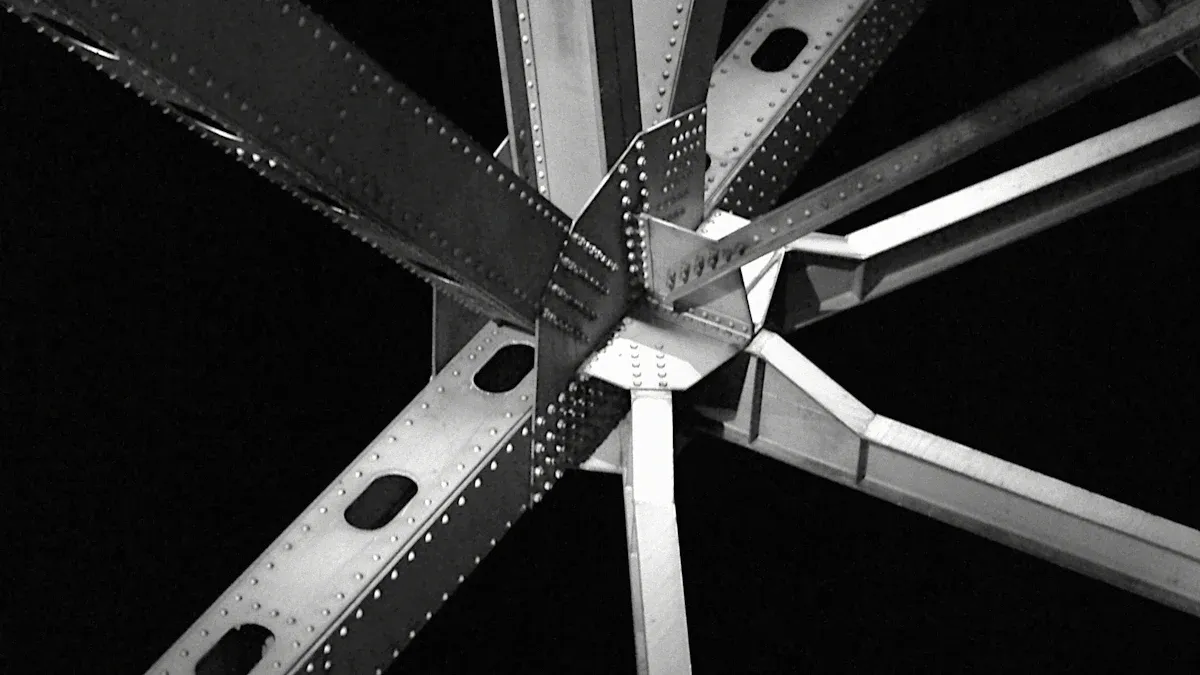
A box truss is a square or rectangular aluminum framework with four main chords connected by diagonal bracing. You see it on concert stages, in broadcast studios, and above trade show floors. The closed box shape gives it torsional rigidity and predictable load behavior.
Design and Materials
Manufacturers build box truss from aluminum alloy, and the grade affects performance. You will encounter two common options in event production.
| Property | 6061-T6 | 6082-T6 |
| Strength | High | Higher |
| Corrosion Resistance | Good | Better |
| Weldability | Good | Moderate |
| Typical Use | General truss | Heavy-duty truss |
Choose 6061-T6 for most lighting and stage systems. It balances strength, weldability, and cost. Choose 6082-T6 for large-span roofs and heavy-load systems. GF-Truss stocks both grades, so you can match the alloy to the job. Standard sections run from 200x200 mm to 290 mm F34 configurations, with main tubes from 30x2.0 mm to 50x2.0 mm and lengths from 0.5 m to 3 m.
Load Capacity and Stability
Capacity drops as span grows. A 10-inch box truss with 2-inch OD main tube carries 2,390 lb point load at 1 m and 675 lb at 8 m. Uniform distributed load falls from 1,000 lb/ft to 40 lb/ft over the same range.
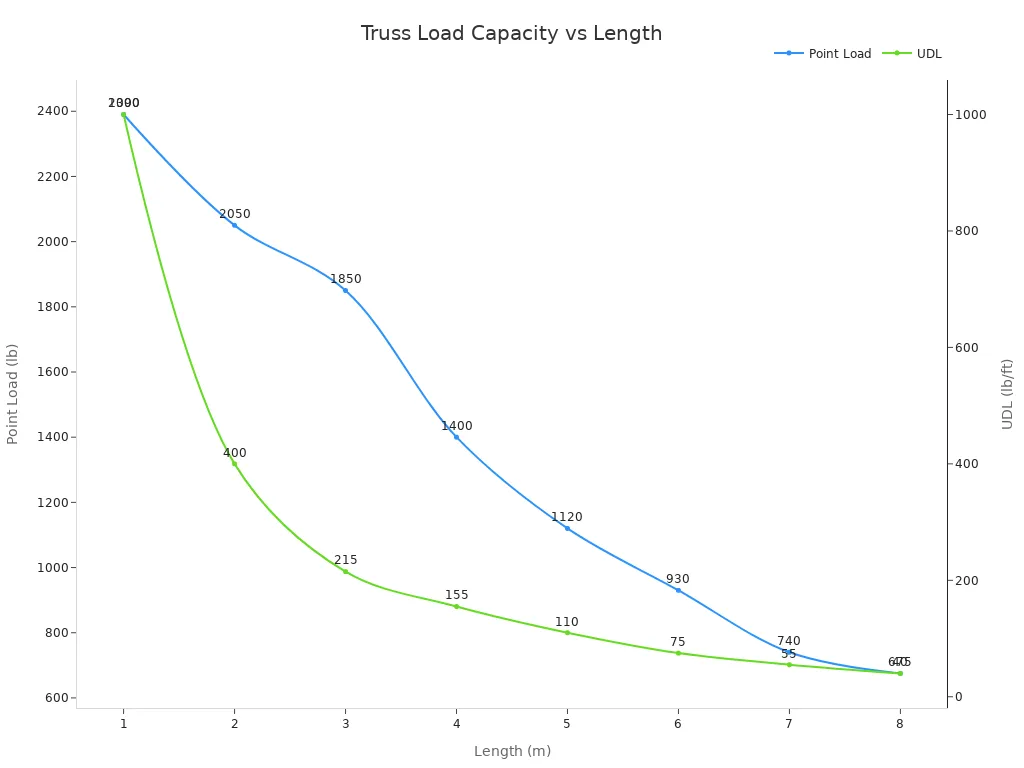
The four-chord design spreads load across more aluminum, so deflection stays low. Bolted connections resist vibration and hold tight over long installations.
Pros and Cons
Box truss offers high strength, excellent stability, and long service life. It suits heavy rigs and permanent setups. The trade-offs are higher weight and slower assembly. Sections need more crew and more truck space. Plan for longer setup windows when you specify this system.
What Is Spigot Truss?

A spigot truss is an aluminum framework that joins sections with conical connectors instead of bolts. You push the spigot into the receiver, insert a pin, and move on. This connection style makes the system a favorite for touring and temporary builds.
Design and Materials
Manufacturers build spigot truss from heat-treated aluminum alloy. A commercial spigot truss listing specifies 6061-T6 aluminum alloy for its higher strength, better corrosion resistance, longer service life, and improved installation safety. Industry sources name 6061-T6 and 6082-T6 as the most widely used grades today.
| Alloy Grade | Family | Temper (T6) Meaning | Strength & Toughness | Relative Cost |
| 6061-T6 | Al-Mg-Si alloy | Solution treatment plus artificial aging to raise strength | Lower than 6082-T6 | Lower |
| 6082-T6 | Al-Mg-Si alloy | Same T6 heat-treatment state | Higher strength and toughness than 6061-T6 | Higher |
GF-Truss machines its spigots to tight tolerances, so every connection seats cleanly and every section in your inventory performs the same way.
Load Capacity and Stability
Capacity depends on span and load type. A standard F34 section with Ø50 × 3.0 mm main tubes carries 1,430 kg/m at a 2 m span and drops to 86 kg/m at 12 m.
| Span (m) | Distributed Load (kg/m) |
| 2 | 1,430 |
| 4 | 715 |
| 6 | 353 |
| 8 | 199 |
| 10 | 126 |
| 12 | 86 |
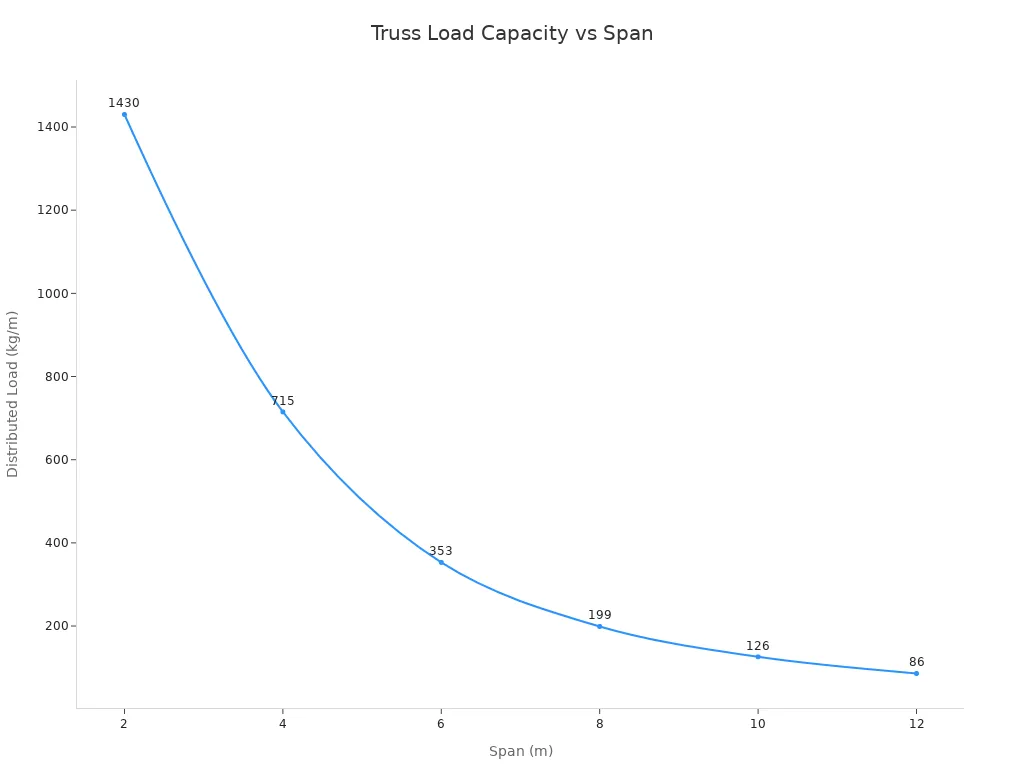
F34 truss capacity depends on span length and how the load is applied. A short span holds far more than a long one, and a uniformly distributed load outperforms a single point load. Consult the published F34 load and span table for the exact run, and confirm any heavy-duty overhead load with a rigger.
Pros and Cons
Spigot truss earns its place through speed and flexibility. A high-precision conical connection system ensures rapid assembly, and the modular design suits concert stages, exhibitions, and trade shows. Aluminum construction keeps it durable and lightweight.
· Rate the load and distribute it evenly; exceeding capacity is a common mistake.
· Secure rigging points and place them correctly.
· Add bracing at regular intervals for stability.
· Inspect sections before every installation.
· Confirm compatibility when you mix connection types.
Box Truss vs Spigot Truss: Key Differences
You can compare these two systems across five practical dimensions. Each difference points to a specific job type. Use this breakdown to match the truss to your production.
1. Strength and Load Capacity
Load capacity separates the two systems most clearly. The table below shows typical ratings across truss categories.
| Truss Type / Material | Load Capacity |
| General lighting truss | 200–1,000 kg per meter |
| Light duty truss | 200–300 kg/m |
| Medium duty truss | 300–600 kg/m |
| Heavy duty box truss | 600–1,000 kg/m |
| Aluminum box truss | up to 907 kg per 10-ft section |
| Steel box truss | up to 2,722 kg per 10-ft section |
| Aluminum triangular truss | 227–318 kg per 10-ft section |
Box truss wins on raw load capacity. Its four-chord square profile spreads weight across multiple tubes. Spigot truss handles lighter rigs well.
You get more headroom for heavy lighting rigs, LED walls, and audio arrays with a four-chord box design. Spigot truss covers light and medium-duty work with confidence. Check the published load table for your exact span before you finalize any rigging plan.
2. Weight and Portability
Spigot truss holds the advantage here. Its lighter sections move easily by hand, and one technician can position a section without a lift. You save on freight, truck space, and crew size on every load-out.
Box truss carries more aluminum per section, so it weighs more. Plan for forklifts or multi-person lifts during load-in. The extra weight buys you stiffness and stability, and that trade-off pays off on long spans and heavy rigs.
3. Assembly Speed and Ease
Spigot connections set the pace on tight schedules. Your crew pushes the spigot into the receiver, inserts the pin, and moves to the next section. A full stage build finishes in a fraction of the time a bolted system requires. Touring productions and one-day corporate events depend on this speed.
Bolted box truss takes longer. Each connection needs bolts, spacers, and torque checks. The process rewards patience with a rigid, vibration-resistant joint. Choose this system when setup time matters less than long-term stability.
4. Cost Comparison
Purchase price favors spigot truss in most catalogs. Lighter sections use less aluminum, and the pin connection costs less to machine than a full bolt-and-spacer kit. You also spend less on freight and labor over the life of the inventory.
Box truss costs more up front. The added material and heavier connections raise the unit price. Offset that cost with longer service life and fewer replacement cycles. Rental companies often find the total cost of ownership balances out across years of use. GF-Truss prices both systems competitively, so you can build a mixed inventory without stretching your budget.
5. Common Applications
Both systems serve the live-event industry across a wide range of segments:
· Corporate meetings
· Trade shows
· Theatrical and film productions
· Entertainment and concert tours
· Architectural applications
· Specialty applications
The duty level decides which system fits each job.
| Truss Type | Common Applications / Use Cases | Duty Level |
| Box truss | Professional staging and event production; medium to heavy-duty projects; multi-directional support due to four main chords | Medium to heavy-duty |
| Spigot (pin and spigot) connection | Light-duty and medium-duty truss; event projects; quick assembly | Light to medium-duty |
You will see aluminum truss on concerts, exhibitions, stage production, rental inventory, and touring projects. The metal balances weight against performance and resists corrosion. GF-Truss supplies both connection types for these markets, so your inventory covers every booking on your calendar.
Is Box Truss Stronger Than Spigot Truss?
Yes, box truss generally carries more load than spigot truss of similar size. The advantage comes from geometry, not marketing. You get more aluminum in the load path, and that extra material translates into higher capacity and lower deflection.
How the Four-Chord Design Spreads Load
A four-chord design places main tubes at each corner of the square profile. Diagonal bracing ties those chords together along every face. When you hang a lighting rig, the load travels down all four chords at once. Each tube carries a share, so no single member takes the full stress. This distribution keeps the section stiff under bending and torsion. A box truss also resists twisting better than an open profile, and that rigidity protects your rigging points over long spans.
Where the Weakest Point Really Is
The weakest point sits at the connection, not in the chords. Bolted box truss spreads force across multiple bolts and spacers, so the joint stays rigid. Spigot connections concentrate force at the pin and spigot interface. That design works well within its rated capacity, and quality machining keeps it reliable. Check the connection hardware on every section before you build. A worn pin or a loose bolt reduces capacity far more than tube strength ever will.
Which Truss Assembles Faster?
Spigot truss wins the speed contest in almost every real-world scenario. Your crew connects sections in seconds, and the build moves forward without interruption. That speed changes the economics of a tight load-in schedule.
Spigot Connections and Setup Time
A spigot connection works with three simple actions. Your technician pushes the conical spigot into the receiver, inserts the pin, and checks the seat. No tools are needed. No torque values are required. A two-person crew can build a full stage grid in a fraction of the time a bolted system demands.
Touring productions rely on this speed. One-day corporate events depend on it too. Every minute you save on assembly goes straight into lighting focus, video calibration, or sound checks. GF-Truss machines each spigot to tight tolerances, so pins seat cleanly on the first push and sections align without force.
Bolt and Spacer Considerations
Bolted connections take longer by design. Each joint needs bolts, spacers, and a torque check. Your crew must align the sections, insert the hardware, and tighten every fastener to spec. A large build can involve hundreds of bolts, and each one adds time.
The payoff comes in rigidity. A bolted joint resists vibration and holds tight over long installations. Choose this connection style when the build stays up for weeks and stability outranks speed. Plan a longer setup window and assign enough crew to the task.
Which Truss System Fits Your Event?
Your event type points to a clear answer. Match the system to the load, the schedule, and the site.
1. Concerts and Heavy Setups
Concerts demand capacity and stability. Review the project requirements against the recommended system.
| Project Requirement | Recommended System | Rationale |
| Weather protection for festivals and outdoor stages | Roof Truss System | Supports roofing, lighting, LED screens, and audio over large spans |
| Heavy-duty structures, FOH towers, multi-level platforms | Ringlock Structure System | Delivers higher load capacity and greater rigidity |
| Curved, circular, or irregular layouts | Custom Truss Design | Solves structural needs beyond catalog products |
Heavy Duty Truss System — For high-load environments such as large concerts and outdoor festivals. Engineered solutions are offered based on real load requirements, not just product specifications.
Spigoted truss suits larger spans and heavier concert loads. Plated truss delivers maximum rigidity for static, high-capacity structures. Touring truss prioritizes portability for aggressive load-in schedules. Pre-rig truss arrives with fixtures and cabling pre-installed for repeat productions.
2. Trade Shows and Outdoor Events
Trade shows reward speed and portability. The Global Truss F34 Multi-Tower Ground Support System serves booths, portable stages, and lighting rigs with quick setup and professional appeal. Its lightweight aluminum handles large-scale events, and the corrosion-resistant build works indoors and outdoors.
TentCraft offers a quick-clip truss system that is modular and snaps together fast, enabling rapid assembly for brand activations and outdoor events without complex structural engineering.
Versatruss aluminum systems also fit trade shows. They stay lightweight, portable, and quick to assemble and disassemble between events.
3. Span Length, Budget, and Crew Skill
Measure your longest span first. Long spans and heavy rigs favor a box truss. Tight budgets and small crews favor spigot connections. Confirm your crew's experience level before you commit. GF-Truss supplies both systems, so you can match each build to its demands.
Can You Combine Box Truss and Spigot Truss?
You can combine both systems on one production, but you cannot join them directly. Each system uses its own connector, and the two do not interchange. Plan the mix at the design stage, not on the load-in floor.
Mixing Systems on One Production
Treat each system as a separate structure. A spigot section will not connect to a bolted end-plate section without adaptation. Different sizes need adapter plates to bridge them. Keep these compatibility rules in mind as you plan.
| Compatibility Rule | Implication for Mixing Box and Spigot Truss |
| Connection type must match exactly | The two connector systems cannot be directly joined |
| Conical and bolt/fork systems do not interchange | A spigot section will not connect to a bolt/fork section without adaptation |
| Different sizes require adapter plates | Adapter plates bridge sections of different sizes |
| Standardize on one engineered system | Keep sections and accessories compatible across inventory |
| Confirm connection type before mixing | Verify hardware type before combining any sections |
A common approach assigns each system its own role. Use the heavier frame for the main grid and the lighter system for satellite positions. GF-Truss supplies both types, so you can build a mixed inventory with confidence.
What to Confirm With Your Supplier
Confirm the details before you combine any components. Ask about end-plate dimensions, hole patterns, and hardware specs for bolted sections. For spigot sections, verify the connector, receivers, pins, and retainers belong to the approved system. Similar-looking spigots are not automatically interchangeable.
| Connection System | Items to Confirm With Supplier |
| Bolted end-plate | End-plate dimensions; hole pattern; hardware specification; assembly procedure; tightening requirements |
| Conical connector | Approved connector, receivers, pins, and retainers; part identification; fit; condition; installation instructions |
| Cross-brand combination | Confirmation covering the exact sections and connectors before combining |
Before combining components, obtain confirmation covering the exact truss sections and connectors. Matching dimensions or a successful physical fit does not establish the performance of the assembled structure.
GF-Truss documents every connection spec, so your crew knows exactly what fits before the truck rolls.
Neither system is universally better. Match the truss to the job. Heavy loads and long spans favor box truss; speed and portability favor spigot truss. Assess span, budget, and crew skill before you decide. Suppliers like GF-Truss offer both systems, giving your production real flexibility.
FAQ
Q: How long does aluminum truss last?
A: You can expect decades of service from quality aluminum truss. Proper storage, routine inspection, and careful handling extend its life. GF-Truss builds both systems for repeated rental use.
Q: Can you use box truss and spigot truss outdoors?
A: Yes, both systems handle outdoor events well. Aluminum resists corrosion, and both types support roofing and staging. Confirm wind loads and anchoring with a qualified engineer before you build.
Q: Which truss type should a rental company stock?
A: Stock both. Box truss covers heavy concert and installation bookings. Spigot truss serves fast-turnaround corporate and trade show jobs. A mixed inventory from GF-Truss keeps your fleet ready for every booking.