In the design and operation of clean operating rooms in hospitals, there is a core principle that cannot be compromised: the air must be purer than water . "Why must H14 HEPA filters be used at the end of the operating room?" Today, we will delve into the scientific logic behind this "ceiling" in light of the stringent requirements of medical infection control.
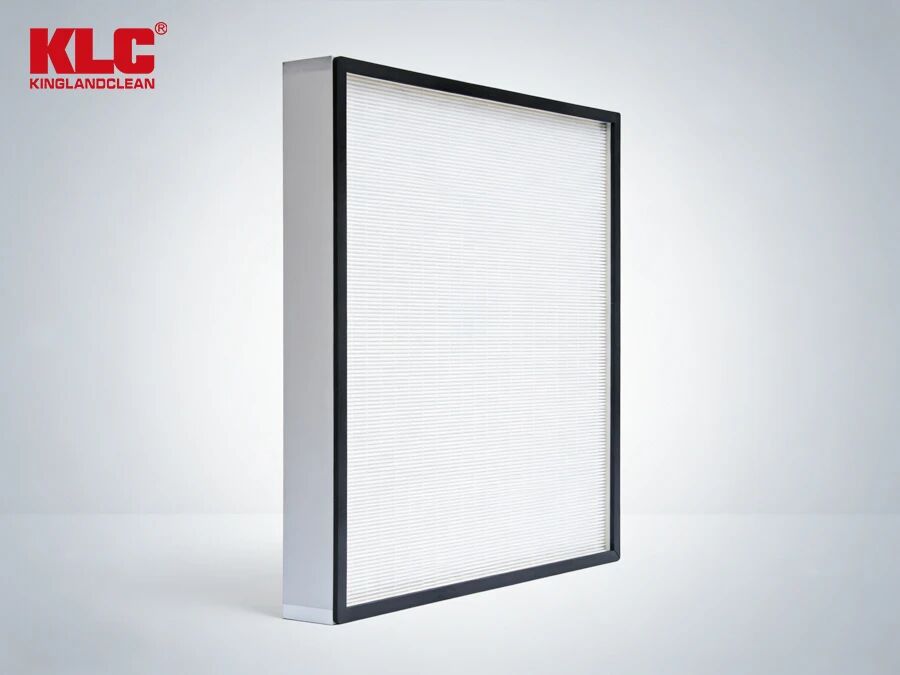
What is H14? Why is it the "gold standard" in operating rooms?
First, we need to clarify the definition of an H14 HEPA filter in the international standard ISO 29463. H14 filters have extremely high filtration efficiency; for the most difficult-to-filter particles (MPPS) in the 0.1-0.2μm range, their filtration efficiency must reach over 99.995% . This means that out of every 100,000 highly penetrating particles, fewer than 5 have a chance of escaping its interception.
In a medical environment, we face not only dust, but also airborne bacteria and viruses . Common pathogens such as Staphylococcus aureus (approximately 0.7 μm), Mycobacterium tuberculosis (approximately 0.5-3 μm), and influenza virus (approximately 0.08-0.12 μm) usually do not exist alone, but rather attach to droplet nuclei or dust particles and float in the air.
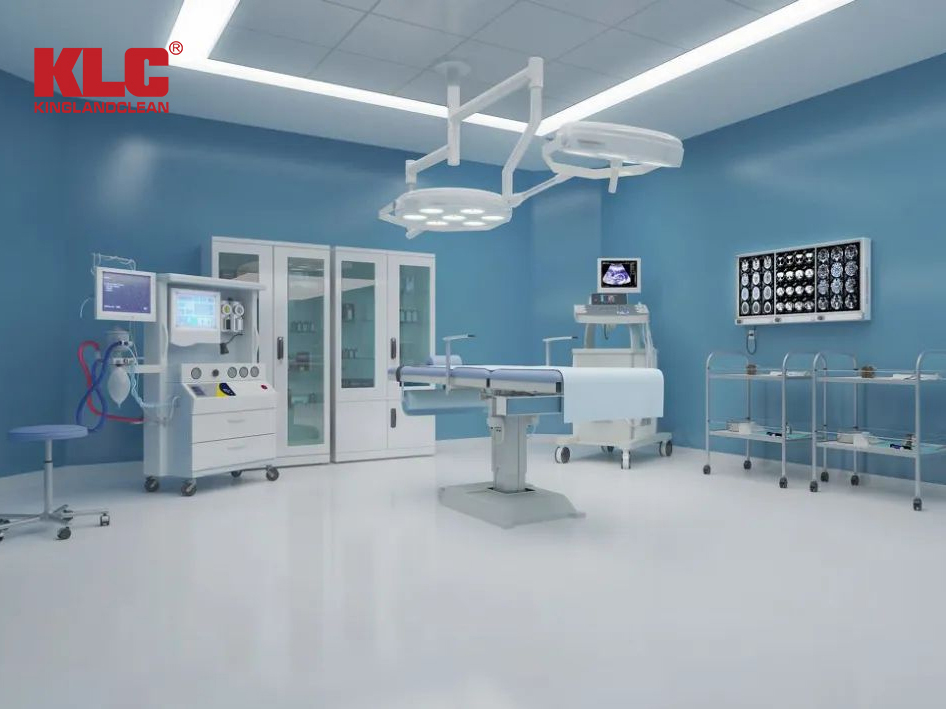
The H14 hepa filter 's interception mechanisms (including inertial impaction, interception effect, and Brownian motion) have an extremely strong ability to capture these complex particles. It effectively prevents surgical site infections , serving as the last physical barrier to protect patients' lives.
Medical Infection Control Perspective: From "Filtering Dust" to "Blocking Infection"
According to the requirements of Infection Control, the core task of a clean operating room is to maintain a bacteria-free environment.
1. Deep interception capability : G4 or F7 level panel filters or pocket filters used in ordinary air conditioners are mainly for large dust particles of 1-5μm, and are almost ineffective against submicron particles carrying pathogens. H14 HEPA filters, on the other hand , can capture particles smaller than 0.3μm, directly cutting off the airborne transmission routes of bacteria and viruses.
2. Positive pressure protection : Operating rooms typically maintain a Cleanroom pressure differential relative to the corridor to prevent unfiltered outside air from flowing back in. Without an H14 hepa filter at the end of the room , this positive pressure can actually blow unsterilized air into the surgical area, posing a serious risk of cross-infection .
3. The regulations mandate that, according to the "Technical Specifications for Clean Operating Rooms in Hospitals," Class I and II clean operating rooms must have high-efficiency particulate air (HEPA) filters installed at the air supply terminals. This is not merely a technical recommendation, but a legal red line for medical safety.
Visual Comparison: Protection Levels of Different Filters
the H14 hepa filter more intuitively , I have compiled the following comparison table:
|
Filter grade |
Common types |
Filtration efficiency (0.3μm) |
Medical application scenarios |
|
G3/G4 |
Panel filter (primary filter) |
~90% |
Air conditioning unit pre-filters to prevent dust. |
|
F7/F9 |
Pocket filter (medium efficiency) |
~95%-99% |
To prevent dust accumulation in the coils, general ventilation is recommended. |
|
H13/H14 |
H14 hepa filter (high efficiency) |
99.995% |
Operating room, ICU, isolation ward |
The last line of defense for life
In Guangzhou medical technology is advancing rapidly, but we cannot ignore the most basic air environment. The H14 HEPA filter is not just an industry standard; it is a "lifeline" suspended from the ceiling of the operating room.
Every breath, every incision, depends on the absolute safety of this safety net. As builders or managers of medical environments, please remember: in the operating room, H14 is not an option, but a necessity.