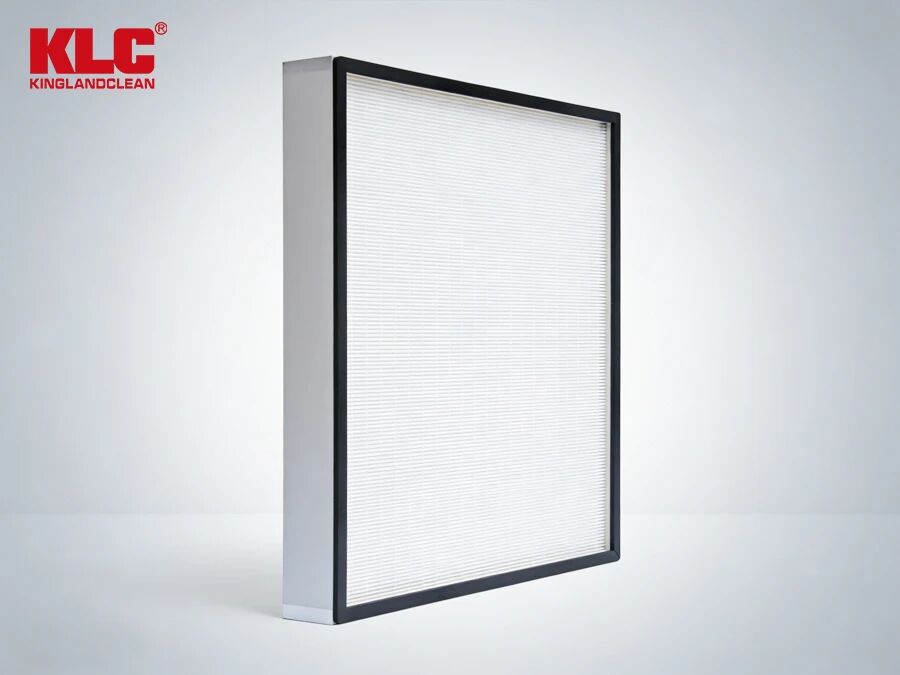
In the daily operation and maintenance of cleanrooms, pharmaceutical plants, or semiconductor manufacturing workshops, we often hear the following advice: high-efficiency particulate air (HEPA) filters should not be used for extended periods in environments with relative humidity exceeding 85%.
To many laypeople, this may seem like just a dry parameter limit, but it hides a dual crisis in materials science and microbiology. Today, we'll delve into why this "85%" red line is so important, and how moisture gradually undermines the defense system of high-efficiency filters.
I. The "Incompatibility" of Fiberglass Filter Paper
The core component of a high-efficiency particulate air (HEPA) filter is typically ultrafine glass fiber filter media. This material is able to capture particles as small as 0.3 micrometers or even smaller because it possesses an extremely complex interwoven structure and electrostatic adsorption capabilities.
However, glass fiber has a fatal weakness—hydrophilic embrittlement.
Geometrical attenuation of strength: Fiberglass filter paper possesses extremely high mechanical strength when dry, capable of withstanding the impact of airflow. However, once ambient humidity spikes, water molecules rapidly penetrate the gaps between the fibers. This not only disrupts the bonding between fibers but also causes the supporting framework to soften due to moisture. Under high humidity and high pressure conditions, the filter paper is highly susceptible to deformation, collapse, and even perforation. Once the filter paper structure is damaged, its supposed "high efficiency" vanishes, and unfiltered dirty air will leak directly into the clean area.
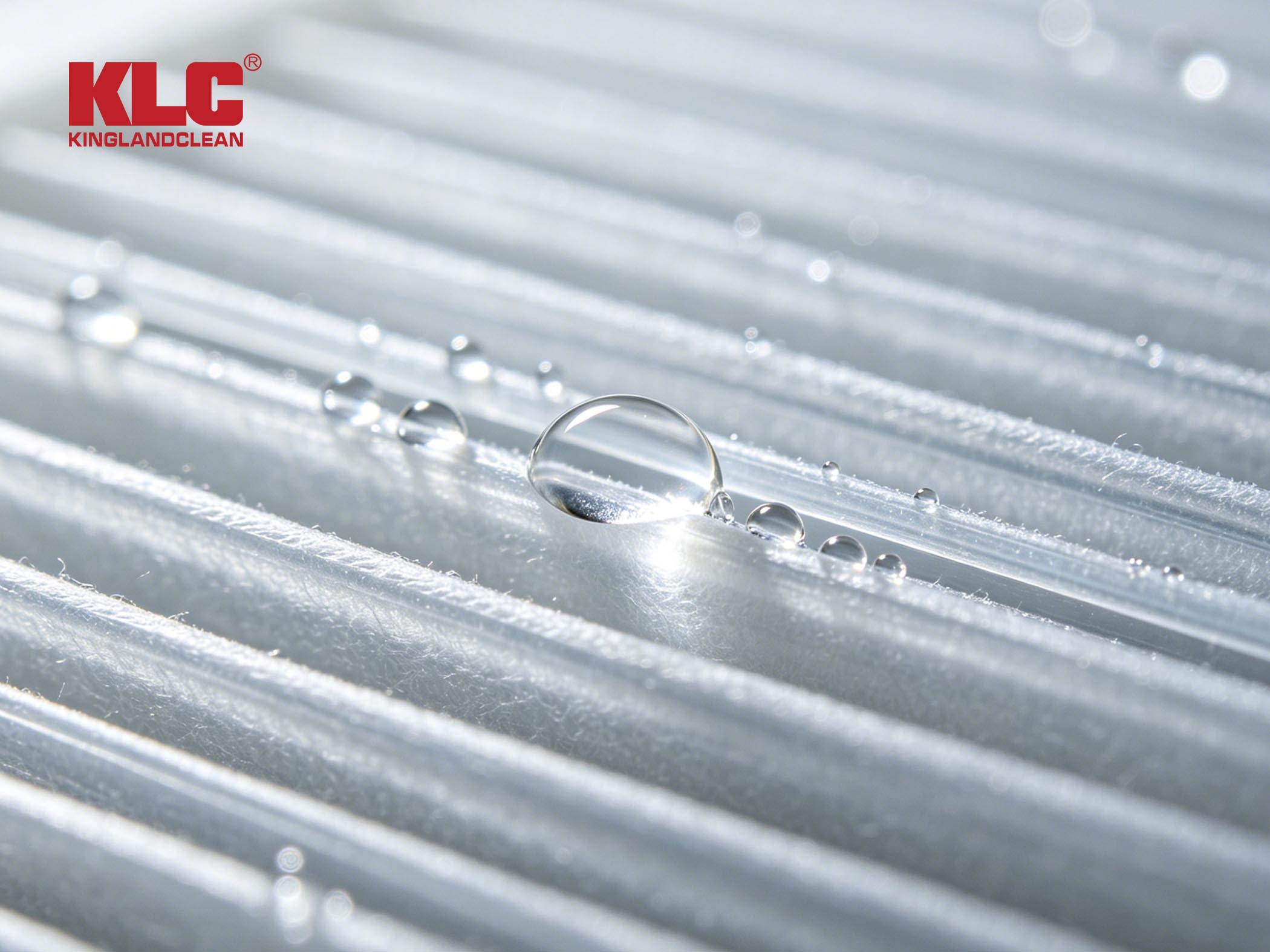
A vicious cycle of air resistance: In high humidity environments, moisture in the air condenses on the filter paper, increasing the weight of the filter material and blocking airflow channels. This causes a sharp increase in pressure drop. To maintain airflow, the fan has to operate at higher power, which not only increases energy consumption but also accelerates the physical fatigue of the filter paper and shortens the lifespan of the equipment.
II. A "breeding ground" for microbial growth
If the damage that moisture inflicts on physical structures is a "hard kill," then the risk of microbial growth brought about by high humidity is a "soft kill," and the consequences are often more insidious and severe.
In spaces with relative humidity exceeding 85%, the air is nearly saturated with water vapor. For high-efficiency filters, this is tantamount to providing a perfect petri dish for microorganisms such as bacteria and mold.
Nutrient formation: Dust particles intercepted by high-efficiency filters absorb moisture in high-humidity environments, leading to the accumulation of organic matter. This accumulation, combined with moisture, becomes an excellent "food" for the proliferation of microorganisms.
Secondary contamination outbreaks: Once microorganisms colonize and multiply deep within the filter, they produce metabolic byproducts (such as endotoxins) and bacterial debris. As airflow passes through, these biological contaminants can penetrate the filter or detach from its surface, causing severe secondary contamination. In the pharmaceutical industry (Pharma Air Filters) or hospital operating room (Operating Room Ceiling Systems), this contamination is absolutely intolerable, directly threatening drug safety and patient health.
III. Searching for "Special Forces" in High Humidity Environments
Since ordinary HEPA filters are so fragile in high humidity environments, how should we deal with situations where we need to handle high humidity air (such as some industrial exhaust or special laboratories)?
Based on industry experience, we need to find alternative solutions:
Metal/Ceramic Filters: In extreme operating conditions with extremely high temperatures or humidity, traditional fiberglass must give way to metal mesh air filters or ceramic fibers, although this is more expensive, it avoids the risk of hydrolysis.
High-temperature and high-humidity resistant filter media: Some special processes use filter paper coated with polytetrafluoroethylene (PTFE) or synthetic fiber filter media. These materials are extremely chemically stable, do not absorb water or mold, and although their initial efficiency may be slightly lower than that of glass fiber, their stability in harsh environments far exceeds that of the latter.
Strict pre-treatment: The most fundamental solution remains "prevention is better than cure." Before air enters the HEPA filter, it must undergo deep dehumidification and pre-filtration by an air handling unit (AHU system) to ensure that the air entering the terminal HEPA filter is at a suitable temperature and is dry and clean.
In conclusion, the 85% humidity red line is not unfounded, but rather a no-go zone jointly defined by the physical limits of the strength of fiberglass filter paper and the safety baseline for microbial control.
As guardians of cleanrooms, we must never overlook the profound impact of environmental parameters on filter media during selection and maintenance. Only by using the right products in the right environment can we ensure the absolute safety of the clean space.