Phenolic Resin 2402 is a high-performance thermosetting synthetic resin. Chemically known as 4-tert-Butylphenol formaldehyde resin, it features 100% lipid solubility as well as excellent resistance to high temperatures and chemical corrosion. This product enjoys widespread application in fields such as rubber vulcanization, adhesives, and anti-corrosion coatings, while also demonstrating significant potential within the realm of emerging materials.
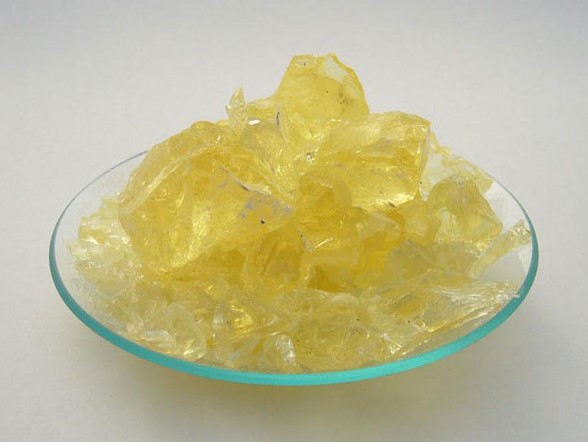
1. Product Introduction
Phenolic Resin 2402 belongs to the category of thermosetting phenolic resins and is characterized by its 100% lipid solubility. It is typically synthesized through a polycondensation reaction between p-tert-butylphenol and formaldehyde in the presence of an alkaline catalyst. During the reaction process, an initial addition reaction occurs to form hydroxymethyl-p-tert-butylphenol; subsequently, further polycondensation takes place—either between hydroxymethyl groups or between hydroxymethyl groups and the active hydrogen atoms on the phenol ring—resulting in the formation of resin molecules possessing a specific cross-linked structure. As a specialized phenolic resin for butyl rubber vulcanization, it serves as a vulcanizing agent for butyl rubber, natural rubber, styrene-butadiene rubber (SBR), and silicone rubber; it is particularly well-suited for the vulcanization of butyl rubber.
2. Product Performance
It enhances heat resistance and adhesive strength, exhibits minimal deformation, possesses good ductility, and demonstrates low tensile elongation. Characterized by excellent compatibility, it is primarily soluble in aromatic hydrocarbons, aliphatic hydrocarbons, halogenated hydrocarbons, esters, ketones, and tung oil.
Heat Resistance: It maintains excellent stability in high-temperature environments, resisting deformation or decomposition, and is suitable for the manufacture of heat-resistant products.
Electrical Insulation: It possesses superior electrical insulation properties, making it suitable for the manufacture of electronic components, such as printed circuit boards and integrated circuit encapsulation materials.
Chemical Resistance: It exhibits strong resistance to a wide range of chemical substances—including acids, bases, and salts—making it suitable for use in harsh chemical environments.
Mechanical Strength: Once cured, the resin possesses high strength and hardness, allowing it to be used in the manufacture of various structural components capable of withstanding specific mechanical loads.
Adhesion Performance: It demonstrates excellent adhesion to a variety of materials—including metals, plastics, and wood—and is frequently utilized as a raw material in adhesives to provide reliable bonding effects.
3. Product Specifications
Softening Point (Ring and Ball Method): ≥ 90–120°C
Hydroxymethyl Content: 9–15%
Lipid Solubility (1:2 Tung Oil, 240°C): Completely soluble. Soluble in organic solvents and vegetable oils such as aromatics, alkanes, halogenated hydrocarbons, esters, ketones, and tung oil; insoluble in water; exhibits low solubility in cold ethanol but is partially soluble in hot ethanol.
Free Phenol: ≤ 1%
Moisture Content: ≤ 1%
Ash Content: 0.3%
Average Molecular Weight: 500–1000
Relative Density: 1.05
4. Product Applications
Phenolic resin 2402 (Akrochem SP-560 Resin) serves as a vulcanizing agent for various rubbers, including butyl rubber, natural rubber, styrene-butadiene rubber (SBR), and butyl-silicone rubber. It is particularly effective for the vulcanization of butyl rubber, enhancing its heat resistance. It exhibits excellent properties such as minimal deformation, superior heat resistance, high tensile strength, and low elongation. It is utilized in the manufacture of heat-resistant butyl rubber products, with a recommended dosage of 5–10 parts.
Friction Materials Industry
Used in the manufacture of:
Automotive brake pads
Motorcycle brake blocks
Industrial brake linings
Clutch facings
Its primary functions include:
Bonding and reinforcing fibers and fillers
Extending wear life
Maintaining braking stability at high temperatures
Reducing thermal fade
Abrasives and Grinding Tools Industry
In grinding wheels, cutting discs, and polishing pads, 2402 phenolic resin is widely used as a bonding agent.
Advantages:
High strength after curing
Strong resistance to centrifugal fracture
Good cutting stability
Resilience against high-speed rotational impact
Electrical Insulation Materials
Phenolic resin possesses excellent insulating properties and dimensional stability, making it suitable for use in:
Switch bases
Electrical appliance housings
Motor insulation components
Laminated board materials
It is particularly well-suited for applications in medium-to-high temperature electrical environments.
Refractory and Thermal Insulation Materials
Model 2402 serves as an inorganic filler binder for use in:
Refractory brick binders
Thermal insulation boards
High-temperature sealing materials
Foundry sand core binding systems
5. Processing Recommendations for Phenolic Resin 2402
To ensure optimal performance, the following points should be observed during actual production:
Mixing Stage
Ensure thorough dispersion of the resin and fillers to enhance product consistency.
Temperature Control
Excessively high processing temperatures may lead to premature curing, while temperatures that are too low can result in insufficient flow; therefore, an appropriate temperature range should be established based on the specific equipment being used.
Storage Conditions
It is recommended to store the product in a cool, dry environment to prevent moisture absorption leading to clumping, as well as degradation caused by high temperatures.
Website: www.elephchem.com
whatsapp: (+)86 13851435272
E-mail: admin@elephchem.com