Today we'll discuss a classic topic in cleanroom and HVAC systems: Pocket Filters and Box Type Filters which one truly offers the best value for money in terms of medium efficiency?
When selecting a product, people often only look at the price, neglecting key indicators such as Dust Holding Capacity , installation space , and Filter Area. Today, we'll conduct an in-depth comparative review from these three dimensions, combined with real-world application scenarios.
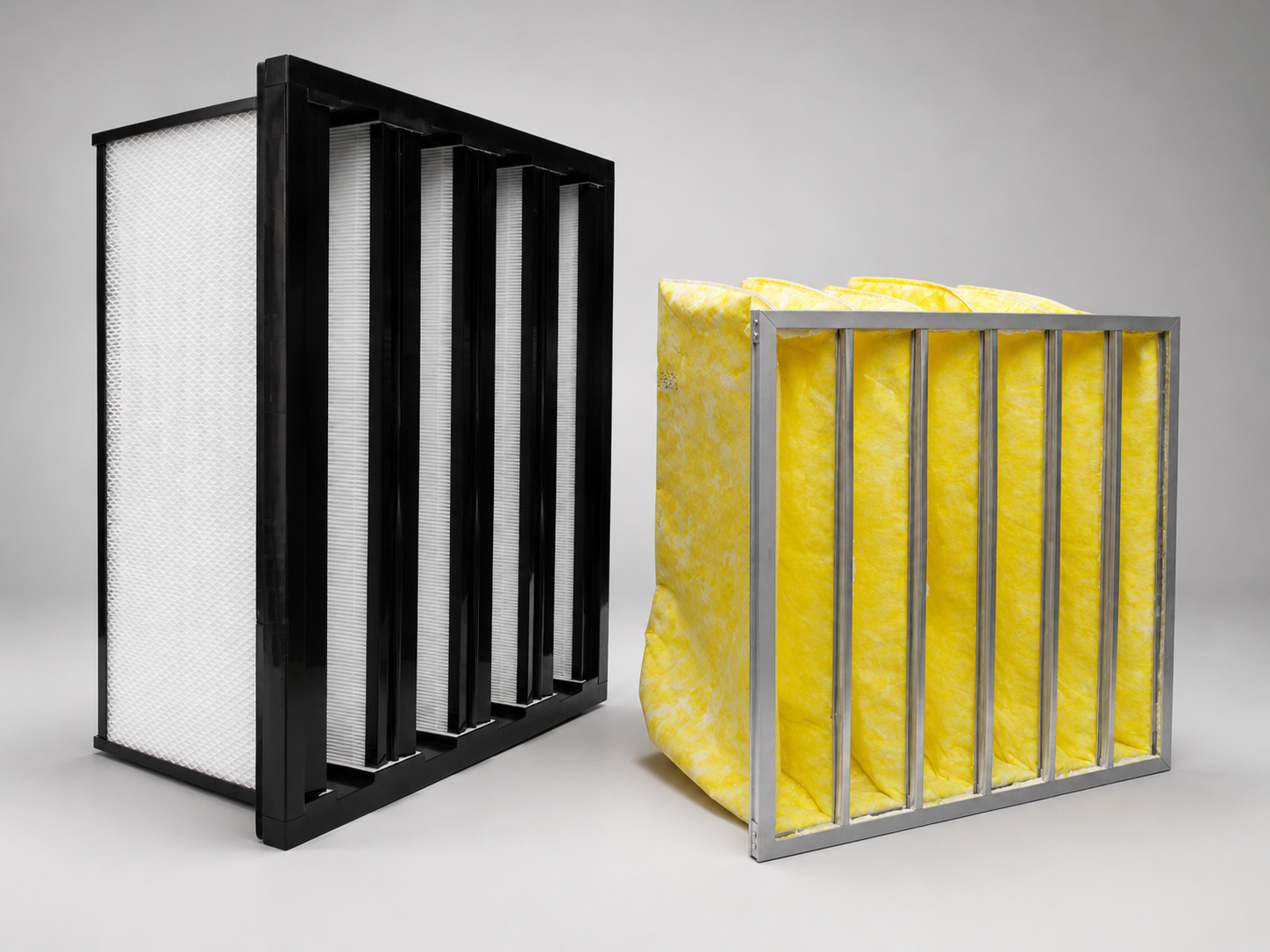
Dust Holding Capacity vs. Filter Area: The Battle Between Deep Pleats and Multiple Bags
First, we need to be clear about one point: the lifespan of a filter largely depends on how much dust it can "eat".
Box Type Filter:This type of filter typically refers to products like Deep Pleat Box Filters or HEPA Boxes . Their most prominent feature is that they are Deep Pleat .
- Advantages: Due to their deep-pleated technology, they can achieve a large filtration area within a limited volume . This means they typically have low initial resistance and a very high dust holding capacity . Box filters are the preferred choice for environments handling high dust loads or applications requiring long-term operation without frequent filter bag replacements.
- Disadvantages: While the deep pleats increase the surface area, they also compress the gaps between the filter media. Once saturation is reached, the pressure differential may rise relatively quickly.
Pocket Filter:
This is the common F7, F8, and F9 grade bag filter.
- Advantages: Its structure is very simple, increasing the contact area through multiple independent "bags". Although the depth of a single bag is not as deep as that of a box filter, the combination of multiple bags still provides a good dust holding capacity .
- Disadvantages: Compared to a deep-pleated box filter of the same size, a standard Pocket Filter often requires a larger physical volume to achieve the same filtration area , which is a challenge in space-constrained environments.
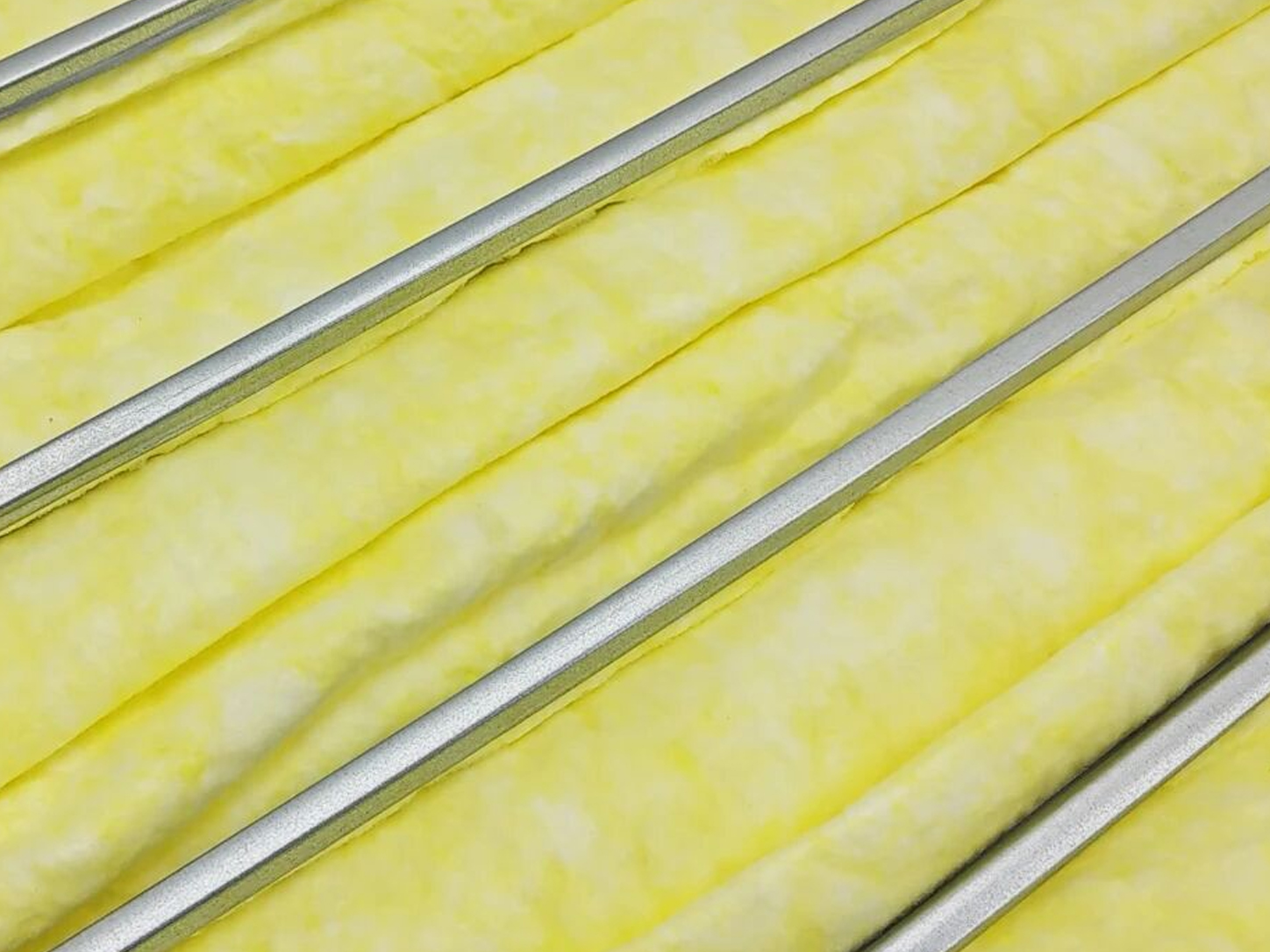
Conclusion: For the same frontal area, box filters (especially deep pleat box filters) usually have a larger filtration area and dust holding capacity , making them suitable for systems with high air volume and long operating cycles.
Installation space and flexibility: The choice between compact and spacious.
Next comes a very real problem in engineering—space.
Box Type Filter:
Box-type filters, especially Deep Pleat Box Filters , are typically designed to be very compact, making them suitable for embedding in ceilings or inside equipment.
- Application scenarios: They are commonly used in places where thickness is strictly limited, such as in ceiling laminar air flow systems or FFUs (Fan Filter Units) . If your equipment rack has limited depth or ceiling height is tight, box-type filters are the best choice.
Pocket Filter:
Bag filters require sufficient "droop space" to unfold their filter bags.
- Applicable scenarios: These require a sufficiently long channel after the frame is installed to allow the filter bags to hang naturally. This means you need a deeper installation.
- Advantages: Although it occupies more vertical space, it is more flexible in terms of horizontal space requirements. You can choose different numbers of bags (such as 4 bags, 6 bags, 8 bags, 12 bags) depending on the size of the duct, making it easier to adapt to non-standard ducts in terms of horizontal dimensions.
Conclusion: If you prioritize compactness , choose the Box Type Filter ; if your device has sufficient depth and requires flexible adaptation to duct sizes, the Pocket Filter offers greater flexibility.
3. The ultimate winner of the best value for money award
After all that, who is the king of cost-effectiveness?
- If you're a space freak:
your equipment space (especially in the thickness direction) is extremely valuable, or you need a very large filtration area to reduce air resistance, then a Deep Pleat Box Filter or Box Type Filter is your best choice. Although the initial investment may be slightly higher, its low air resistance and long lifespan (thanks to its large dust capacity ) will save you a lot on electricity bills. - If you're a "maintenance enthusiast":
you value the ease of replacement and initial cost. Pocket filters are usually more affordable, and replacement doesn't require disassembling a complicated frame; you can simply pull out the old bag and replace it with the new one, resulting in extremely low maintenance costs.
In general central air conditioning units (AHUs), pocket filters remain the mainstream choice for medium-efficiency applications due to their ease of maintenance and cost advantages; however, in FFUs or clean booths where space requirements are extremely compact , box-type filters are irreplaceable.